
OpenAI Is Building Its First Physical Device and It Says a Lot About Where AI Is Headed
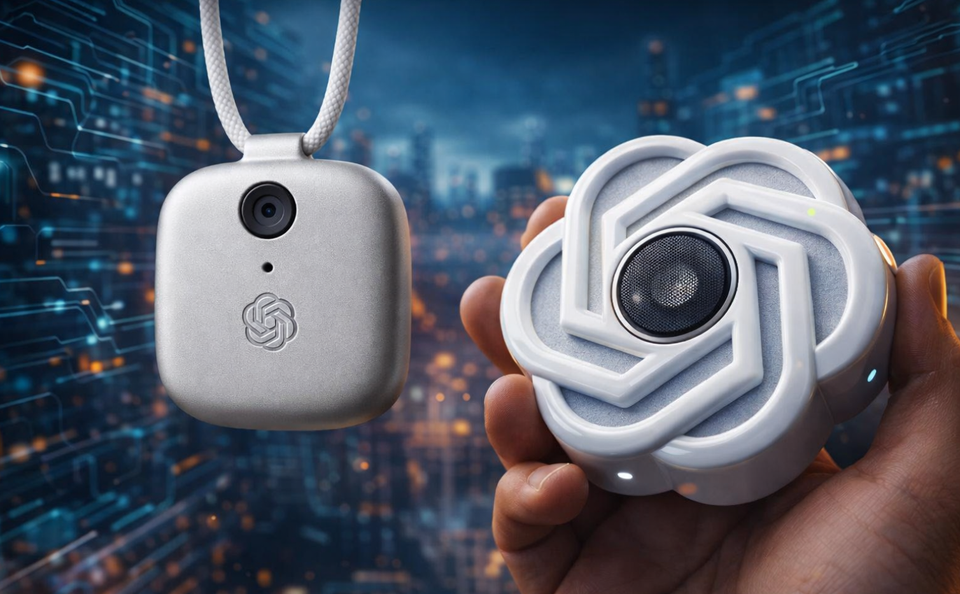
For years, OpenAI has lived entirely on screens. Chat windows, APIs, plugins, developer consoles. Powerful, but still trapped inside the same rectangles we have been staring at for decades.
That is about to change.
Multiple reports now point to OpenAI unveiling its first consumer hardware device in the second half of 2026. Not a phone. Not a laptop. And very intentionally, not another screen.
This is OpenAI stepping into the physical world, and the design choices tell us more than the leaked specs ever could.
A Device That Tries to Undo the Smartphone Era
OpenAI CEO Sam Altman has described the upcoming device as “shockingly simple” and more “peaceful” than a smartphone. That framing matters. This is not about competing head to head with Apple or Google on displays, apps, and attention extraction.
The device is expected to be voice first, screen free, and ambient. Something that listens, understands context, and responds when needed, without demanding constant interaction.
Internally, it has reportedly been referred to by codenames like Gumdrop or Sweetpea. Externally, the message is consistent. This is meant to be a third core device, alongside your phone and laptop, not a replacement for either.
That alone makes it more interesting than most hardware launches.
Jony Ive and the Return of Intentional Design
The hardware effort is being led in collaboration with Jony Ive, following OpenAI’s acquisition of his startup io in 2025.
This is not a coincidence or a branding exercise. Ive’s entire design philosophy has always been about removing friction, not adding features. The idea that a device should disappear into daily life rather than dominate it aligns perfectly with OpenAI’s current messaging.
The reported form factors range from a small pod to a pen-like object weighing as little as 10 to 15 grams. Something you can clip to clothing, slip into a pocket, or wear on a lanyard. No glass slab. No app grid. No dopamine loop.
Whether that vision survives contact with real users is another question entirely.
Why Voice Matters This Time
OpenAI has also been reorganising internal teams around audio and voice models. The company has openly acknowledged that voice interfaces have lagged behind text in both quality and adoption.
That is a problem if your future hardware strategy depends on voice working flawlessly.
Unlike the Alexa and Google Assistant wave of the late 2010s, this generation of voice AI is built on large language models that understand intent, nuance, and context. In theory, that makes ambient computing viable in a way it never was before.
In practice, it also raises uncomfortable questions around privacy, always on microphones, and environmental awareness through cameras and sensors. OpenAI has said little so far about how these concerns will be addressed, which suggests the hardest design problems are not technical, but social.
Manufacturing, Scale, and Reality Checks
On the production side, OpenAI has reportedly selected Foxconn as its manufacturing partner, with facilities likely in Vietnam or the United States. Early ambitions of shipping tens of millions of units quickly now appear more conservative, with broader availability potentially slipping into 2027.
That is probably sensible.
Hardware is unforgiving. Unlike software, you cannot hotfix manufacturing mistakes or quietly roll back a bad update. For a company whose core strength has always been iteration speed, this is a completely different game.
What This Really Signals
The most important takeaway is not whether the device looks like a pen, a pod, or something else entirely. It is that OpenAI believes the future of AI does not live inside apps.
This is a bet that conversational, contextual AI should sit closer to the real world than the app store. Closer to speech than text. Closer to presence than interaction.
If it works, it could redefine how people relate to AI day to day. If it fails, it will still be a valuable signal of how seriously the industry is trying to move beyond screens.
Either way, 2026 is shaping up to be the year AI stops being something you open and starts being something that is simply there.
Member discussion