
Most People Missed the Real Story Behind DeepSeek
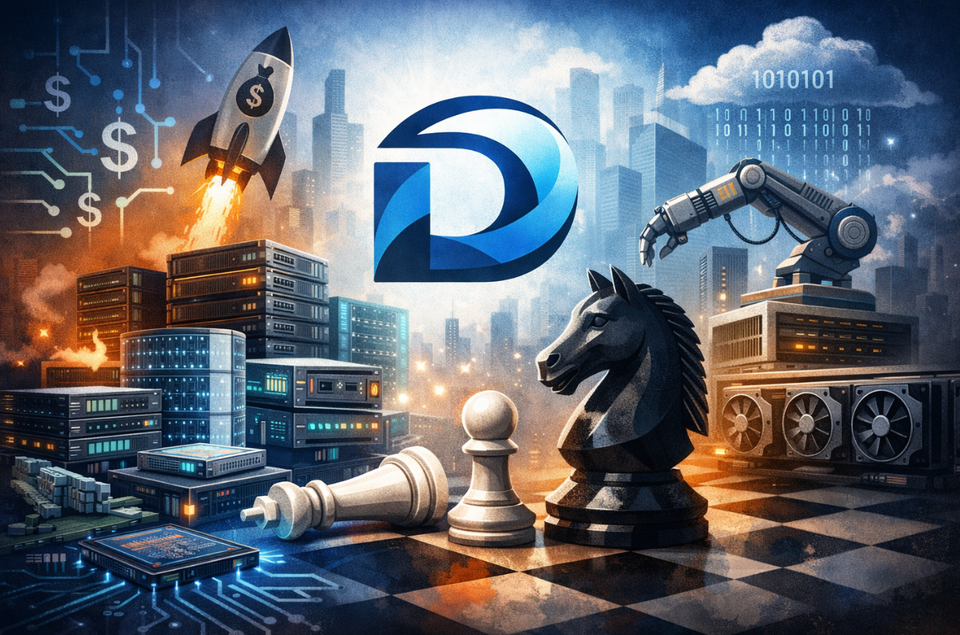
When DeepSeek briefly overtook ChatGPT at the top of the US App Store, most of the commentary focused on the obvious headline.
A Chinese startup built a better chatbot.
That framing misses the real story entirely.
What DeepSeek actually demonstrated is that much of the modern AI infrastructure narrative is built on shaky assumptions. Not about capability, but about cost, scale, and who gets to compete.
The Infrastructure Myth We All Bought Into
Over the past two years, the dominant belief in AI has been simple.
The best models require massive compute.
Massive compute requires enormous capital.
Enormous capital creates unassailable moats.
OpenAI has spent billions on training runs and infrastructure. Google has poured resources into Gemini at a scale only hyperscalers can afford. The message has been consistent.
If you are not operating at that level, you are not in the game.
Then DeepSeek built R1 for around £6 million and briefly knocked ChatGPT off the number one spot in the US App Store.
This was not a fluke. It was a signal.
This Is Not David vs Goliath
The temptation is to frame this as an underdog story.
It is not.
A better analogy is Docker.
There was a time when scaling software meant owning racks of servers, managing complex orchestration, and burning capital just to stay online. Containers did not make hardware disappear. They made it efficient.
Docker proved that architecture matters more than brute force.
DeepSeek just did the same thing for large language models.
They did not outspend anyone.
They out-engineered them.
What DeepSeek Actually Changed
Strip away the hype and the geopolitics, and the technical shift becomes clear.
DeepSeek showed that you can build a highly competitive model by focusing on efficiency instead of excess.
An open source model that performs at a level comparable to GPT-4.
Training costs that are a fraction of what the market assumed was necessary.
Support for on-premise and self-hosted deployment.
No Silicon Valley cost structure or cultural overhead.
This was not about winning an app ranking. It was about collapsing the cost curve.
Why This Matters More Than One App Store Moment
If a £6 million model can compete with models trained on billion-dollar infrastructure, a lot of existing assumptions start to fall apart.
Enterprise AI budgets suddenly look inflated.
Data sovereignty strategies no longer require massive compromises.
The idea of inevitable AI monopolies becomes much harder to defend.
For years, vendors have justified lock-in with scale. Expensive APIs were framed as the price of access to intelligence that could not exist anywhere else.
DeepSeek challenges that premise directly.
The Quiet Divide Emerging in AI Strategy
Right now, there is a split forming.
Many founders and teams are still planning their AI strategies around recurring API costs, usage-based pricing, and dependency on a small number of providers.
At the same time, a smaller group of operators is doing something very different.
They are running strong models locally.
They are deploying on their own infrastructure.
They are paying pennies where others pay pounds.
They are designing systems they actually control.
This is not theoretical. It is already happening.
The Window Is Closing
The real risk is not missing DeepSeek itself.
The risk is continuing to design AI systems as if efficiency does not matter.
The companies that win the next phase of AI will not be the ones that spend the most. They will be the ones that deploy intelligence intelligently.
Efficiently.
Adaptably.
Without unnecessary dependence.
If DeepSeek proved anything, it is this.
The future of AI belongs to those who understand architecture, not just scale.
Member discussion