
Anthropic launches Claude Cowork, a version of its coding AI for regular people
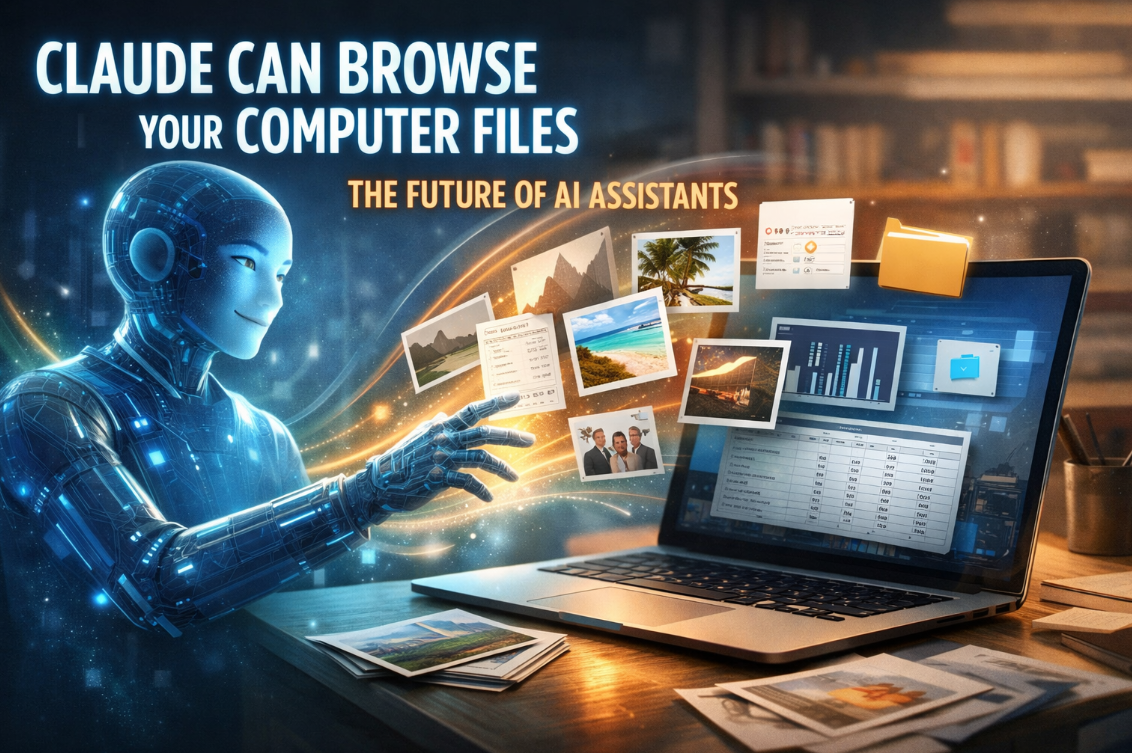
Claude Can Now Browse Your Computer Files. This Is Bigger Than It Sounds
For years, AI assistants have lived behind a text box. You copy things in, you paste things out, and the real work still happens somewhere else. With Claude Cowork, that boundary is starting to disappear.
Anthropic has quietly taken a major step toward agentic AI with the launch of Claude Cowork, a feature that allows Claude to access, read, and work directly inside folders on your computer. Not cloud storage. Not uploads. Your actual local files.
This is not just another productivity feature. It is a shift in how AI fits into everyday work.
From Chatbot to Coworker
Claude Cowork builds on the success of Claude Code, Anthropic’s developer focused agent that already has a strong reputation among programmers. The difference is accessibility.
Where Claude Code lives in a terminal and assumes technical confidence, Cowork is designed for normal people doing normal work. You give Claude access to a specific folder on your Mac, and it can operate inside that space like a junior assistant.
That means it can:
- Browse folders and understand what is inside them
- Rename files using consistent naming conventions
- Read documents, images, and screenshots
- Turn receipts or invoices into structured spreadsheets
- Create new documents based on existing files
- Use browser access via the Chrome extension to complete multi step tasks
The important detail is scope. Claude cannot see anything you do not explicitly allow. It only operates inside the folder you choose.
Photos Are the Quiet Game Changer
The headline feature is file access, but the most interesting capability is Claude’s ability to understand images stored locally on your machine.
This is where things start to feel different.
Screenshots of receipts become expense reports. Photos of whiteboards turn into structured plans. Image heavy folders like downloads or design assets can be sorted, labeled, and documented automatically.
For anyone who lives with a messy downloads folder full of screenshots, PDFs, and unnamed images, this alone feels magical.
It also hints at where this is going next. Once an AI can see your photos, understand them, and act on them without manual uploads, the computer itself becomes the interface.
Agentic AI Without the Buzzwords
Claude Cowork is part of a wider shift away from chatbots and toward agents. An agent does not just respond. It acts.
Anthropic is not alone here. Tools like ChatGPT Agent, Gemini’s computer use models, and AI powered browsers are all moving in the same direction. The difference is that Cowork feels practical right now.
You are not asking it to book flights or order pizza. You are asking it to clean up your digital mess, do admin, and turn chaos into structure.
That is why this lands.
Felix Rieseberg from Anthropic summed it up well when he explained that Claude Code users started using the tool for everything from taxes to life admin. Cowork is simply making that behavior accessible to a much larger audience.
The Risks Are Real
Anthropic has been unusually direct about the risks.
Cowork can take destructive actions if you are vague. It can delete files. It can misinterpret instructions. And because it can read from websites via browser access, there is a theoretical risk of prompt injection attacks.
For now, this is a research preview. Anthropic explicitly recommends using it only on non sensitive folders.
That caution is worth taking seriously. Giving any AI write access to your local machine is a trust decision, not a novelty feature.
Why This Matters More Than It First Appears
Claude Cowork is not about file management. It is about collapsing the distance between intent and execution.
Instead of telling an AI what is in your files, the AI can see them. Instead of manually converting outputs into the right format, the agent does it in place. Instead of juggling tools, folders, and copy paste workflows, the work happens where the data already lives.
This is how AI stops feeling like software and starts feeling like infrastructure.
It is also why white collar work should be paying attention. Once agents can reliably browse, interpret, and act on local data, entire categories of administrative and coordination work quietly disappear.
We are not at full autonomy yet. But Claude Cowork is a very clear signal of what comes next.
The chatbot era is ending. The coworker era has started.
Member discussion